 |
|
|
||||
|
Peeling (glycolic, salicylic, pyruvic, ticloroacetic acid) 1/2
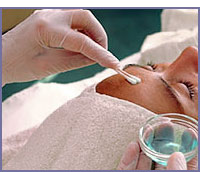
The chemical peeling is a dermatocosmetic technic, based on the application of one or more chemical irritating substances (weak acids) on the skin, generally of the face. These substances have an exfoliating effect, with removal of the superficial cutaneous layers, favouring an improvement of the cutaneous texture and clinico-cosmetologic benefits (advantages) to the skin.
These substances reduce the cohesion of the cutaneous cells, favouring the removal of the keratin plugs of comedos and the detachment of superficial cells (corneocytes): this effect improves the cellular turn-over of the epidermis. With strong peeling there is a necrosis of keratinocytes, which are removed and the cellular turn-over replace these necrotic cells from the follicular epithelium. In the dermis there is an initial irritating effect with edema and vasodilatatation, and subsequently the fibroblasts are stimulated to produce glycoprotein, new collagen and elastin, with the result of new structural resettling of the fibrous component of the dermis and an aestethic improvement of the cutaneous texture. The peelings differ for the exfoliating action and the depth of the effect, in fact depending on the level of penetration the different substances are divided into three categories: the SUPERFICIAL (light or soft) have effect in the epidermis, sometimes in the papillary derma and are glycolic acid, Mandelic acid, Lactic acid, Salicylic acid. The MEDIUM P. arrive in the superficial dermis: Piruvyc acid and Tricloroacetic acid 30%. The SRONG P. arrive in the medium dermis: Tricloroacetic acid 50%, Baker-Gordon and Litton Fenol. Sometimes different substances are used in association. (combined peeling). 1) SUPERFICIAL PEELING (Soft or Light) - Glycolic Acid: is an alfa-Hydroxy acid; the presence of two atoms of C favours the penetration in the epidermis. With low concentration diminish the cohesion of keratinocytes and with higher concentration and longer exposing time can cause necrosis of the cells. It is used at the concentration of 30-70% with few minutes of application time, once a week for 2-6 weeks. After application a light erythema appears and a fine desquamation can last few days. It is used in photo-aging (fine wrinkles and solar dischromies) and for sequellae of acne. - Mandelic acid: is used at the concentration of 50%, with the same indications of glycolic acid: sequellae of acne and photoaging....(continued) |




