 |
|
|
||||
|
Psoriasis
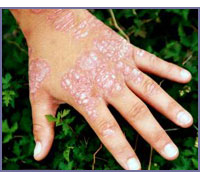
The Psoriasis is a dermatosis of unknown etiology and with complex pathogenesis. Genetic factors certainly have a primary role in the developing of the disease. Different stimulating factors: ambiental, infective, psychologic and pharmacologic in a predisposed subject can flare the beginning of dermatosis, which consists in a complex cascade of pathogenetic events with the final appearance of erithemato-squamous psoriatic plaques in the skin.
The big amount of clinical and experimental trial has not yet defined the primary role of keratin ocytes or of lymphocytes, or of both. The interaction among immuno competent calls (antigen presenting-cell, T-lymphocyte), the cutaneous cells (kera tinocytes) and the endothelial cells of cutaneous vessels in psoriatic patients cause the production of numerous substances, so called cytokines, which mediate the keratinocytes proliferation and the inflammation in the superficial dermis. The scientific progress, besides the better comprehension of pathogenetic mechanisms, has favoured new therapies (so called “biologic drugs”), which are very useful in the most severe forms of psoriasis, not responding to traditional therapies. In the future new “biologic” drugs will allow better clinical results with less side effects. In the moderate form of psoriasis, the “traditional” topical therapies are used: keratolytic ointments, derivates of tar, topical steroids, vitamin-D derivates and topical retinoids; when the dermatosis is more widespread a systemic therapy is required: retinoids, methotrexate, Cyclosporin and specially Phototherapy, these therapies are usually associated. The retinoids act on the epithelial cells, the other therapies act on the lymphocytes, methotrexate on both. The new “biologic” drugs act on different steps of the immunologic regulation of the psoriatic process. A precise clinical evaluation from an expert dermatologist will allow the choice of the most appropriate therapy, depending on the severity of the dermatosis and the clinical conditions of the patient. |



